CheatGPT
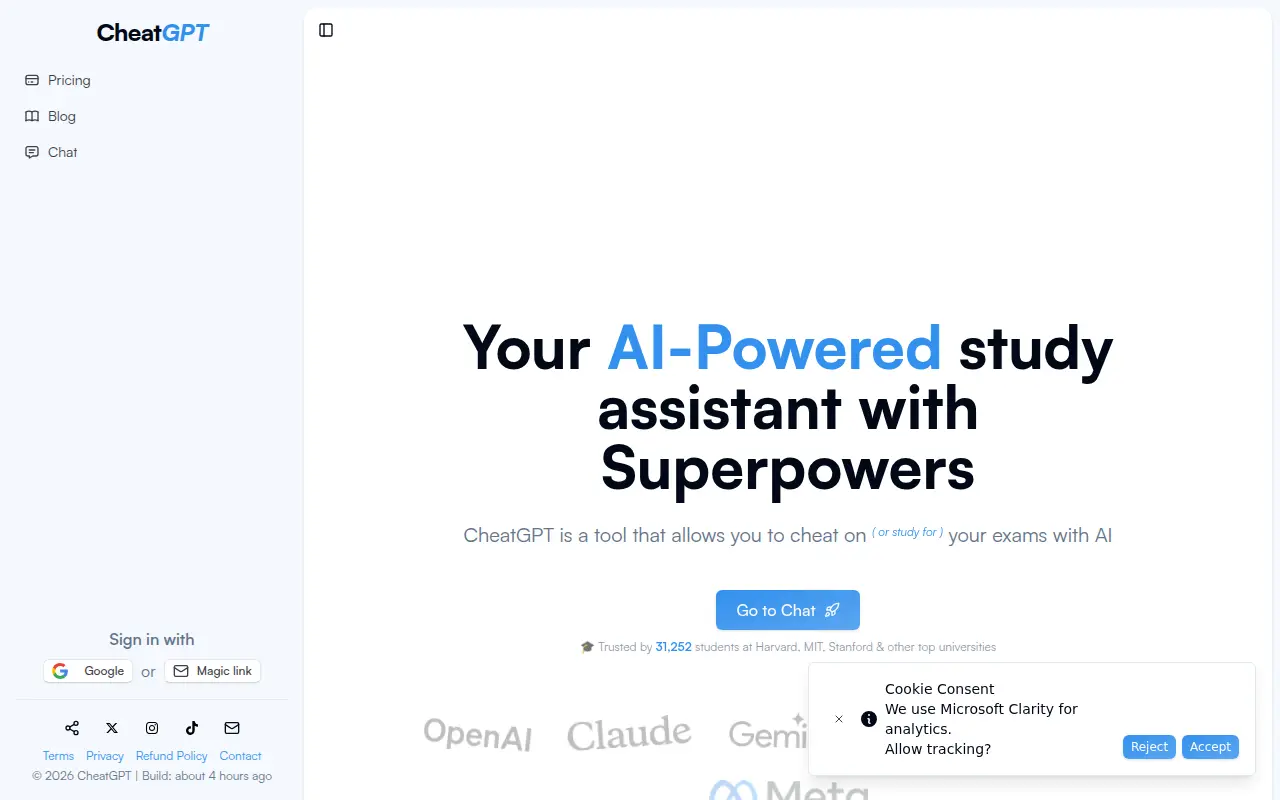
About CheatGPT
CheatGPT is an AI-powered study assistant designed for students, developers, and those engaged in learning. It provides access to various premium AI models, including o4 Mini, Gemini 2.5 Pro, and Claude 3.7 Sonnet, at affordable subscription rates. The platform offers multiple features such as web search, PDF analysis, quiz creation, and specialized modes, aimed at enhancing the study experience. Users can choose from different subscription plans, including a free tier and monthly options that allow access to advanced tools and features.
The service is particularly popular among students at e…
The numbers show a lean product with paying customers: $933 in recurring revenue and $614 reported for the last 30 days. A very high profit margin (90%) implies costs are low — likely an automated, software-first offering — which makes the business capital-efficient at its current scale. However, the recent decline (-21%) is a clear warning sign: user or revenue churn is outpacing acquisition right now.
As a business, CheatGPT looks like an early commercial AI tool that can operate with minimal overhead, but growth is the immediate challenge. For founders, that points to prioritizing retention, funnel efficiency, or pricing adjustments. For potential backers, the product demonstrates unit economics that can scale if growth stabilizes, but current top-line momentum is negative and monthly traffic data is not provided to judge acquisition channels or volume.
— Strengths
— What to watch
◆ Best suited for
A judgment from project data — not a user review.