Golang College
About Golang College
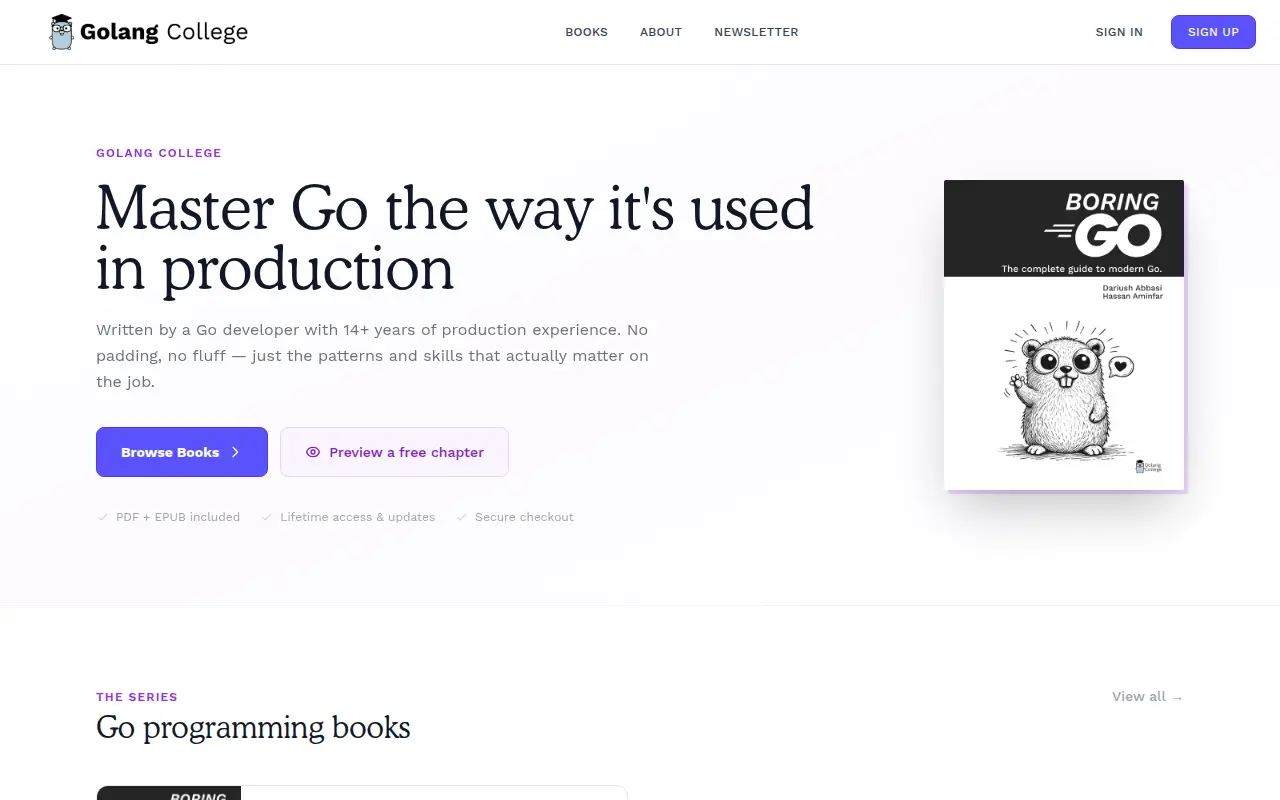
Golang College offers a comprehensive series of books designed to teach the Go programming language with a focus on practical application in production environments. The materials cater to developers of all skill levels, from beginners to advanced users, emphasizing the importance of writing clean, maintainable, and idiomatic Go code. The content is authored by a developer with over 14 years of experience in building production Go services, ensuring that the examples provided are relevant and applicable to real-world projects.
The book series includes titles such as *Boring Go*, which advocat…
The core signal is clear: the product is monetizing already and grew fast month-over-month — that combination usually points to product-market fit in a narrowly defined niche. Because the offering is educational content for Go, the business can scale distribution without proportionally higher content costs, which helps upside if user acquisition holds.
The flip side is the small absolute revenue figure. Fast percentage growth from a low base can look impressive but is fragile unless backed by retention, recurring purchases, or steady acquisition channels. Given the very recent founding date, the next priorities to watch are repeat buyer behavior, how the team converts interest into stable revenue, and whether they can broaden reach beyond early adopters.
— Strengths
— What to watch
◆ Best suited for
A judgment from project data — not a user review.